
Main Index
In Store
Our Web Store
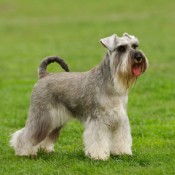
Miniature Schnauzer Picture Gallery
Latest Dog Blogs
- What Are The Basic Commands To Train A Dog?
- PaySafe As The Most Popular Type Of Deposit
- Everything You Need To Know About Pet Sales
- Dogs Contribute To Our Physical And Mental Well Being
- How To Choose Where To Bet On Greyhounds In 2022
- Volunteer With Animals - How To Help Dogs Around The World
- Basic Understanding Of The House Edge
- Why You Should Get A Dog
- Top 20 Popular Dog Names Around The World
- Constipation in Dogs and How to Find Solutions

Canis lupus familiaris
- 29/05/2010
This articles is derived from Wikipedia:
The dog (Canis lupus familiaris[1]) is a domesticated form of the wolf, a member of the Canidae family of the order Carnivora. The term is used for both feral and pet varieties. The domestic dog has been one of the most widely kept working and companion animals in human history.
The word "dog" may also mean the male of a canine species,[2] as opposed to the word "bitch" for the female of the species.[3]
The dog quickly became ubiquitous across world cultures, and was extremely valuable to early human settlements. For instance, it is believed that the successful emigration across the Bering Strait might not have been possible without sled dogs.[4] Dogs perform many roles for people, such as hunting, herding, protection, assisting police and military, companionship, and, more recently, aiding handicapped individuals. This versatility, more than almost any other known animal, has given them the nickname "Man's best friend" in the western world. Currently, there are estimated to be 400 million dogs in the world.[5]
Over the 15,000 year span that the dog had been domesticated, it diverged into only a handful of landraces, groups of similar animals whose morphology and behavior have been shaped by environmental factors and functional roles. As the modern understanding of genetics developed, humans began to intentionally breed dogs for a wide range of specific traits. Through this process, the dog has developed into hundreds of varied breeds, and shows more behavioral and morphological variation than any other land mammal.[6] For example, height measured to the withers ranges from a few inches in the Chihuahua to a few feet in the Irish Wolfhound; color varies from white through grays (usually called "blue'") to black, and browns from light (tan) to dark ("red" or "chocolate") in a wide variation of patterns; coats can be short or long, coarse-haired to wool-like, straight, curly, or smooth.[7] It is common for most breeds to shed this coat.
Dog is the common use term that refers to members of the subspecies Canis lupus familiaris. The term is sometimes used to refer to a wider range of species: it can be used to refer to some belonging to the family Canidae, which includes foxes, jackals, Bush Dog, the African Wild Dog and coyotes and many others; or it can be used to refer to the subfamily of Caninae, or the genus Canis, also often called the "true dogs," which genus includes only the wolf, jackal, coyote, and dog.[8] Some members of the family have "dog" in their common names, such as the Raccoon Dog and the African Wild Dog. A few animals have "dog" in their common names but are not canids, such as the prairie dog.
The English word dog comes from Middle English dogge, from Old English docga, a "powerful dog breed".[9] The term may derive from Proto-Germanic *dukkon, represented in Old English finger-docce ("finger-muscle").[10] The word also shows the familiar petname diminutive -ga also seen in frogga "frog", picga "pig", stagga "stag", wicga "beetle, worm", among others.[11] Due to the archaic structure of the word, the term dog may ultimately derive from the earliest layer of Proto-Indo-European vocabulary, reflecting the role of the dog as the earliest domesticated animal.[12]
In 14th century England, hound (from German: 'hund') was the general word for all domestic canines, and dog referred to a subtype of hound, a group including the mastiff. It is believed that this "dog" type of "hound" was so common that it eventually became the prototype of the category
Please Help Us
IrishDogs.ie takes a lot of time, money and hard work to produce. But we do it because we believe our perspective matters because it might well be your perspective, too.
Our future could be much more secure with your help. Please SUPPORT us by clicking on the Donate Button at the Top Right of your screen.
Quick Search
Donate
Latest Dog Pods
- Tips on How to Stop Your Dog from Biting
- Beware - Not All Advertised Dog Rescues Really Are! How Can You Know The Truth?
- Helpful Tips For Dog Obedience Problems
- How to Keep Dogs From Eating Poop
- Dog Grooming Tips - A General Overview of the Very Basics of Dog Grooming
- Recognising Different Types of Dog Obedience Problems
- 5 Important Tips On Feeding A Puppy